Health & Safety Policy — Flat Clearance Shepherds Bush
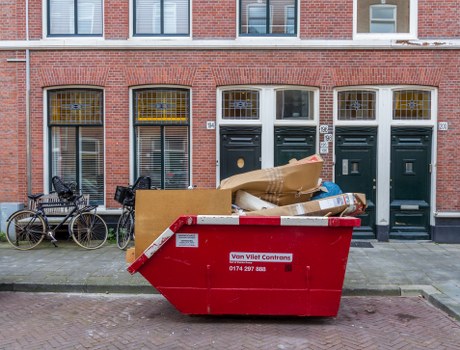 This Health and Safety policy sets out the commitment of Flat Clearance Shepherds Bush to provide a safe working environment for staff, visitors and third parties during all flat clearance, rubbish removal and waste clearance activities. The policy applies across our service area and to all operations related to waste collection, junk clearance and property clearance. It is designed to reduce risk, ensure compliance with good practice and promote a proactive safety culture in every phase of a clearance job.
Our objectives are to eliminate hazards where possible, control risks where they cannot be eliminated, and provide clear lines of responsibility. Managers and supervisors are accountable for implementing the policy on site, while every employee has a duty to work safely and report hazards. We adopt a risk-based approach to planning removals, including pre-clearance assessments, safe systems of work and ongoing monitoring during rubbish collection and disposal activities.
 Risk assessment and method statements form the cornerstone of safe operations. Before each flat clearance or rubbish removal project, a competent person will identify hazards such as manual handling risks, sharps, hazardous household waste, asbestos suspicion, slips, trips and falls, and vehicular movements. Control measures will include safe lifting techniques, segregation of hazardous materials, use of mechanical aids and ensuring safe access and egress for staff and contractors.
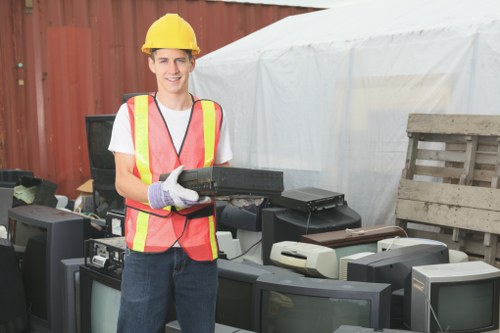
Personal protective equipment (PPE) requirements are defined according to task and risk. Staff are provided with and required to use gloves, hi-vis clothing, steel-toe boots, eye protection and respiratory protection where dust or airborne particles are identified as a risk. Training is mandatory for all operatives in PPE selection, correct use, maintenance and disposal. We will also ensure staff are trained in manual handling, defensive driving for service vehicles and emergency procedures relevant to the clearance industry.
Equipment and vehicle safety are subject to routine checks and maintenance schedules. Vehicles used for waste removal will be inspected before use, loads secured appropriately and drivers briefed on safe routing within the rubbish company service area. Mechanical lifting aids and tools are maintained to manufacturer standards and removed from use if defective. A documented maintenance record will be kept for all relevant equipment.
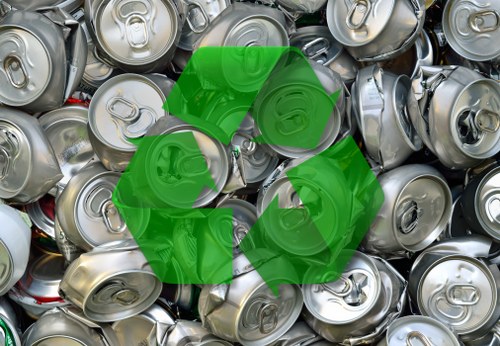
 Waste segregation, storage and disposal follow accepted environmental and safety protocols. General waste, recyclable materials and potentially hazardous items (such as batteries, solvents, fluorescent tubes and electronic waste) are identified and separated at source wherever possible. Items suspected of containing asbestos or other regulated materials will be isolated and handled only by trained personnel or specialist contractors. Clear labeling and secure containment reduce exposure risks during transport and transfer.
Emergency preparedness and first aid arrangements are maintained for all operations. First aid kits are available on-site and in service vehicles, and nominated personnel are trained in first response. In the event of an incident, staff must follow incident reporting procedures and managers will ensure prompt investigation, remedial action and updating of risk assessments to prevent recurrence. Fire safety measures, including vehicle fire precautions and secure storage of flammable materials, are incorporated into job planning.
 Monitoring, auditing and continuous improvement are integral to the policy. Regular site inspections and periodic audits of flat clearance procedures will assess compliance with this Health and Safety policy. Performance indicators such as incident frequency, near-miss reports and corrective action closure rates will be reviewed at management meetings. Lessons learned will be communicated across the organisation to strengthen safe working practices in the waste removal and junk clearance sectors.
 Record keeping and documentation are maintained for training, risk assessments, equipment checks and incident reports. The policy will be reviewed at least annually or whenever there are significant changes to operations, equipment, legislation or following a serious incident. All employees are encouraged to contribute to this process by raising concerns, suggesting improvements and reporting unsafe conditions promptly. By working together we commit to delivering safe, responsible and professional flat clearance and rubbish removal services across our service area.
Responsibilities
Management — ensure resources, training and supervision are in place; Supervisors — implement safe systems on-site; Operatives — follow procedures and report hazards. Everyone is required to cooperate in maintaining a safe workplace.
Review and Communication
The policy will be communicated to staff and contractors and made available for inspection. It is a living document that will be updated to reflect operational changes and improvements in safety practice within the rubbish collection and clearance industry.